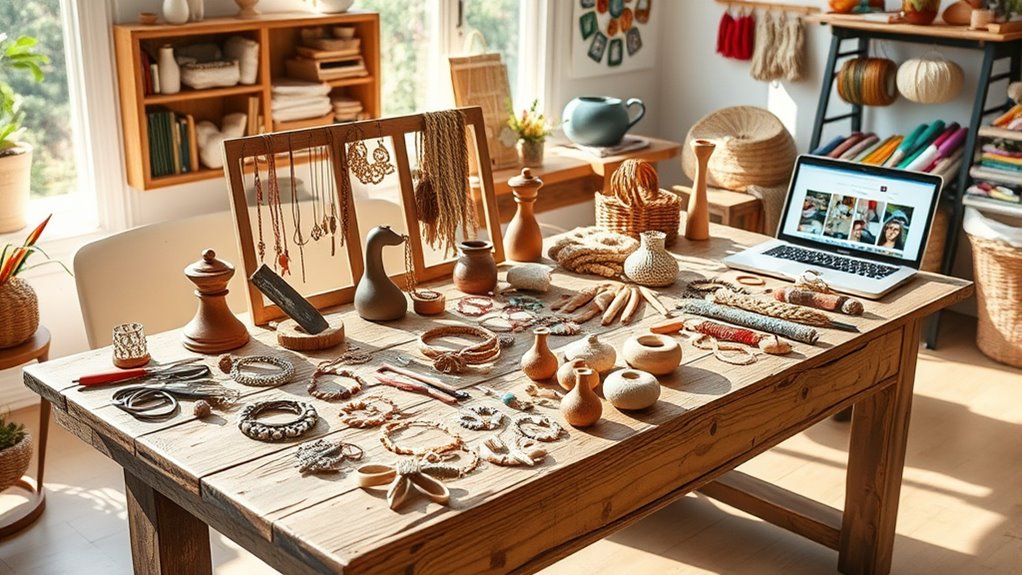

To start selling handmade goods online, focus on creating a strong brand that tells your unique story and highlights what makes your work special, like materials or techniques. Price your products carefully to reflect your craftsmanship and market value, and keep your branding consistent across all platforms. Share your process and inspiration to build trust and authenticity. If you keep exploring, you’ll discover how to refine your approach and grow your craft business effectively.
Key Takeaways
- Develop a strong brand story, unique style, and cohesive visual identity to stand out online.
- Showcase high-quality images and authentic process stories to build trust and emotional connection.
- Price products based on craftsmanship, market research, and value, balancing affordability and perceived quality.
- Maintain consistent branding across all platforms, including website, social media, and packaging, to enhance recognition.
- Regularly evaluate and refine branding and pricing strategies based on sales data, customer feedback, and industry trends.

Selling handmade goods can be a rewarding way to turn your creativity into income, but it requires more than just crafting quality products. To stand out in a crowded marketplace, you need effective branding strategies that communicate your unique story and style. Think about what makes your work different—whether it’s your materials, your techniques, or your inspiration—and craft a consistent brand message around it. Use a memorable logo, cohesive color schemes, and a compelling brand voice that resonates with your target audience. Your branding isn’t just about visuals; it’s about creating an emotional connection that keeps customers coming back.
Effective branding tells your unique story and builds emotional connections with customers.
Pricing techniques also play a fundamental role in your success. Setting the right price isn’t just about covering costs; it’s about valuing your craftsmanship and positioning your products appropriately in the market. Start by calculating your expenses carefully, including materials, time, and overhead costs. Then, research similar items in your niche to understand what customers are willing to pay. Don’t be afraid to experiment with different pricing strategies—consider offering tiered pricing for different product sizes or limited editions to increase perceived value. Remember, pricing too low can undermine your brand’s perceived quality, while pricing too high might limit your sales. Find that sweet spot where your prices reflect the value you provide and appeal to your ideal customers.
Building a strong brand also involves consistent presentation across all platforms, from your website and social media profiles to packaging and shipping materials. When your branding strategies are cohesive, customers recognize and trust your brand more easily. This trust translates into loyalty and word-of-mouth referrals. Use high-quality images and clear descriptions that highlight what makes your handmade goods special. Engage authentically with your audience through storytelling, sharing your process, your inspiration, and your journey as a creator. This personal touch enhances your brand’s authenticity and appeal.
Finally, continuously evaluate and refine your branding and pricing techniques as your business evolves. Pay attention to customer feedback, track sales trends, and stay aware of changes in your niche. Adapt your strategies to meet market demands while staying true to your brand identity. By thoughtfully developing your branding strategies and applying smart pricing techniques, you set a solid foundation for your online craft business, making it easier to attract loyal customers and grow sustainably over time.

ShowMaven Photography Lighting Kit, Softbox Lighting Kit with Photo Backdrop for Product Photography, Portrait photography, Video Shooting Photography
This photo shoot lights and background kit includes almost everything you need. Photo studio photography equipment includes: 1…
As an affiliate, we earn on qualifying purchases.
As an affiliate, we earn on qualifying purchases.
Frequently Asked Questions
How Do I Set Competitive Pricing for My Crafts?
To set competitive pricing for your crafts, start with market research to understand what similar items sell for. Use pricing strategies like cost-plus pricing to cover expenses and include profit. Consider offering discounts or bundling products to attract customers. Keep an eye on competitors’ prices and adjust accordingly. Regularly review your costs and marketplace trends to guarantee your prices stay competitive while still making a profit.
What Legal Considerations Are Involved in Selling Handmade Goods Online?
You need to guarantee your handmade goods comply with legal standards by obtaining the necessary business licenses and understanding intellectual property rights. Protect your designs from copying and respect others’ rights by avoiding infringement. Register your business according to local regulations, and keep records of your licenses. Staying informed about legal requirements helps prevent fines and legal disputes, allowing you to focus on growing your online craft business confidently.
How Can I Effectively Promote My Online Craft Store?
You can effectively promote your online craft store through social media marketing by sharing eye-catching photos, behind-the-scenes content, and customer stories. Engage with your followers regularly by responding to comments and messages to build strong customer engagement. Collaborate with influencers or craft communities to expand your reach. Consistent posting and authentic interactions help grow your audience, drive traffic, and boost sales, making your store more visible and trusted.
Which Platforms Are Best for Selling Handmade Items?
Imagine your handmade creations showcased on platforms where your customers are already engaged. Etsy is a top choice for craft sellers, offering built-in audiences and easy setup. Instagram and Facebook excel through social media marketing, helping you boost customer engagement with beautiful visuals and interactive posts. These platforms let you connect directly, build loyalty, and grow your brand, making them the best options to sell your handmade items effectively.
How Do I Handle Shipping and International Orders?
When handling shipping and international orders, you need to research customs regulations for each country and include accurate customs forms to avoid delays. Use reliable carriers that offer international shipping options, and clearly communicate shipping costs and delivery times to your customers. Track packages to ensure safe delivery, and stay updated on international shipping policies to handle any issues promptly. This way, you’ll provide smooth international transactions and happy customers.

Customize Your own Stickers/Labels with Any Design and Logo-Personalize Your Business stickers-50+ roll Variety of Shapes, Sizes, Backgrounds, and Text Options
Easy to Customize: Choose the quantity you need, Starting at 50 stickers. Upload your design, and we’ll handle…
As an affiliate, we earn on qualifying purchases.
As an affiliate, we earn on qualifying purchases.
Conclusion
As you set out on your online craft journey, remember that every handmade item carries a quiet story, waiting to be discovered. Patience and persistence are your best allies, gently guiding you through the ebb and flow of success. While the path may have its gentle curves and subtle turns, stay true to your passion. With time, your craft will subtly weave itself into the lives of others, quietly leaving a lasting, meaningful impression.

Personalized Electric Branding Iron for Wood, Leather Branding Stamp, Custom Wood Burning Stamp with Your Text, Multiple Handle Options, Handmade Gifts Branding Woodworking Tool for Crafts, hat, BBQ
Custom Design: This personalized branding tool allows you to upload your name, initials, logo, or simple artwork to…
As an affiliate, we earn on qualifying purchases.
As an affiliate, we earn on qualifying purchases.

Craft Pricing Calculator
Quickly calculate prices for handmade goods
As an affiliate, we earn on qualifying purchases.
As an affiliate, we earn on qualifying purchases.