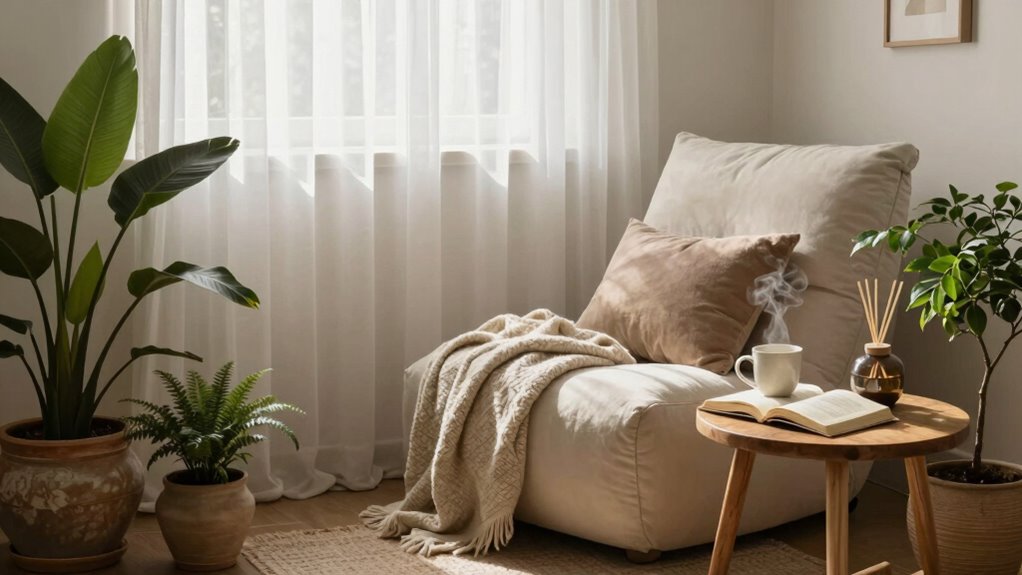

To build a better recovery space for rest, reading, and healing, focus on creating a calm environment with soft, muted colors and warm, adjustable lighting that invites relaxation. Incorporate natural elements like wood, plants, and water features to deepen your connection to nature. Keep the space uncluttered with comfortable furniture and personal touches, making it adaptable over time. If you keep exploring, you’ll discover more ways to make your sanctuary truly supportive and restorative.
Prime for Young Adults — start your free trial
Fast free delivery, streaming and member deals for eligible 18–24 year olds.
As an affiliate, we earn on qualifying purchases.
Key Takeaways
- Incorporate natural elements like plants, water features, and earthy materials to create a calming and restorative environment.
- Use soft, muted colors and adjustable warm lighting to promote relaxation and reduce stress.
- Arrange furniture for comfort and easy movement, emphasizing personal touches for a sense of ownership.
- Keep the space uncluttered and adaptable, regularly updating decor and layout to maintain freshness.
- Integrate sensory stimuli such as gentle fragrances and textures to enhance mental well-being and promote healing.

Creating an effective recovery space is essential for supporting individuals through their healing process. When you design this space, you want it to feel welcoming, calming, and tailored to the needs of the person using it. One way to achieve this is by personalizing the ambiance. Think about the colors, lighting, and textures that resonate with relaxation and comfort. Soft, muted tones like pastel blues or earthy greens can promote tranquility, while warm lighting creates a cozy atmosphere. Avoid harsh fluorescent lights; instead, opt for lamps with adjustable brightness or natural light sources that can be softened with curtains. The goal is to craft an environment that invites rest and reflection, so pay attention to details that make the space feel safe and inviting.
Incorporating natural elements into your recovery space can profoundly enhance its healing qualities. Natural materials like wood, stone, or bamboo introduce a sense of groundedness and serenity. You might add a small indoor plant or two—plants like snake plants or peace lilies are easy to care for and improve air quality. These elements not only beautify the space but also connect the person to nature, which has proven mental health benefits. Consider placing a water feature or natural fiber rugs to further deepen this connection. Additionally, utilizing landscaping principles even in small ways can help create a seamless transition between indoor and outdoor environments, fostering a greater sense of calm. When designing the space, incorporating natural light can further boost mood and promote relaxation, making the environment more conducive to healing. Creating opportunities for mindful interaction with nature can also enhance the restorative effects of the environment and support mental well-being. To deepen this connection, incorporating natural sensory stimuli like gentle breezes or subtle fragrances can enhance relaxation and grounding. Incorporating elements like color accuracy in decor choices can support a soothing atmosphere that aligns with restorative goals. These details help to create a calming environment that stimulates the senses without overwhelming them.
Beyond aesthetics, think about the overall layout and organization. Keep the space uncluttered and serene, allowing for easy movement and a sense of openness. Comfortable furniture, like a plush reading chair or a supportive cushion, invites relaxation and encourages spending time in the space. Add personal touches—favorite books, soothing artwork, or photographs—that make the space uniquely theirs. These elements foster a sense of ownership and comfort, making the recovery process more personal and meaningful.
Finally, remember that a recovery space isn’t static; it should evolve with the individual’s needs. Regularly update the ambiance, introduce new natural elements, or rearrange furniture to keep the environment fresh and engaging. When you focus on personalizing the ambiance and incorporating natural elements, you create a sanctuary that nurtures healing, promotes restful rest, and supports ongoing recovery efforts. This thoughtful environment becomes more than just a room—it becomes an indispensable part of the healing journey.
adjustable warm LED reading lamp
As an affiliate, we earn on qualifying purchases.
As an affiliate, we earn on qualifying purchases.
Frequently Asked Questions
How Can I Personalize My Recovery Space for Maximum Comfort?
You can personalize your recovery space for maximum comfort by adding personalized décor that reflects your style and brings you peace. Use comfort customization techniques, like adjusting lighting, choosing cozy furniture, or adding soft textiles. Incorporate meaningful objects or photos that uplift you. By tailoring every detail to your preferences, you create a calming environment where you feel truly at ease, making your space a perfect sanctuary for rest, reading, and healing.
What Are Affordable Ways to Improve My Recovery Environment?
Like a wise old sage once said, “A penny saved is a penny earned.” To improve your recovery environment affordably, focus on budget-friendly decor and DIY comfort tips. Incorporate soft lighting, cozy textiles, and personal touches you can craft yourself. Rearrange furniture for a calming flow, add plants for freshness, and make use of everyday objects creatively. These simple, cost-effective changes can turn your space into a healing sanctuary.
How Does Lighting Affect Relaxation and Healing in Recovery Areas?
Lighting plays a vital role in relaxation and healing by creating a soothing environment. Ambient illumination with soft, warm light reduces stress and promotes calmness. Incorporate calming color schemes like pastel blues, greens, or neutral tones to enhance this effect. You should aim for gentle, diffuse light that minimizes harsh shadows, helping your mind and body feel more at ease, fostering better recovery and restorative rest in your space.
Are There Specific Scents That Promote Rest and Healing?
You should consider healing scents like lavender, chamomile, and eucalyptus, which promote relaxation, reduce stress, and support restful sleep. Aromatherapy benefits include calming your mind, easing anxiety, and enhancing your overall sense of well-being. By incorporating these healing scents into your recovery space, you create an environment that nurtures tranquility, encourages healing, and invites calmness—making it easier to rest, read, and recover fully.
How Can I Incorporate Nature Into My Recovery Space?
You can incorporate nature into your recovery space by adding natural elements like plants, stones, or wood accents, which promote relaxation. Use sensory integration by including natural sounds, such as water or birds, and soft, earthy scents. Allow ample natural light or mimic it with warm lighting. These elements help create a calming environment that nurtures your senses and enhances your healing experience.
Conclusion
Creating a dedicated recovery space isn’t just about comfort — it’s proven to boost mental health markedly. Studies show that having a personalized area for rest and reflection can reduce stress levels by up to 30%. So, invest in your space, add calming elements, and prioritize your well-being. With just a few thoughtful touches, you’ll create a sanctuary that supports healing, relaxation, and reading, helping you recharge more effectively every day.
Fall yard work Picks
leaf blowers
As an affiliate, we earn on qualifying purchases.