
TL;DR

Get the little things that make your day delivered free with Prime
- Fast, free delivery on millions of items
- Prime Video, Amazon Music and more included
- Member-only deals all year
Commercial synthetic aperture radar constellations can monitor the ground through darkness and cloud, producing more data than human analysts can review quickly. AI is becoming the interpretation layer that detects ships, floods and ground movement, but several market, performance and contract claims still need independent verification.
Artificial intelligence is becoming the operating layer for commercial synthetic aperture radar as expanding satellite constellations produce round-the-clock, all-weather imagery faster than human analysts can review it. The shift matters to businesses, emergency agencies and European governments seeking rapid warnings about floods, infrastructure movement, maritime activity and security threats.
Synthetic aperture radar, or SAR, sends microwave pulses toward Earth and records the returning echoes. Because the satellite supplies its own illumination, it can collect images during darkness and through cloud, fog or smoke, conditions that often restrict optical satellites. Movement along the orbit lets the system combine many echoes into the equivalent of a much larger antenna.
The sensor records both the strength and phase of radar echoes. Comparing phase measurements from repeated passes, through a method called interferometric SAR, or InSAR, can reveal small changes in the ground or built structures. Applications include tracking subsidence near dams, pipelines, railways and bridges, though accuracy depends on collection conditions and processing methods.
The Thorsten Meyer AI briefing says commercial systems from Umbra and ICEYE can reach resolution as fine as 16 centimeters in selected imaging modes. It also describes AI-assisted processing as the mechanism for screening large image volumes, identifying suspected vessels or damaged areas and directing analysts toward scenes requiring human review. AI does not create radar coverage; it helps interpret the resulting data.
Radar That Never Blinks
What SAR Does — for Companies, Institutions, Governments
Active microwave imaging: its own illumination, any weather, any hour. The sensor is solved — the reading of it isn’t.
Three consequences of the physics
Active sensor: transmits its own microwave pulses. Same image quality at 3 a.m. in a North Sea storm as at noon in the Sahara.
Phase-coherent imaging enables InSAR: ground deformation at millimeter scale — subsiding dams, sagging bridges, hidden excavation.
Metal reflects radar strongly. A ship that switches off its transponder vanishes from tracking sites — not from a radar image.
Who buys it, and why — three different answers
- Insurance: flood-extent maps within hours, through the storm — parametric payouts before adjusters arrive
- Infrastructure & energy: InSAR subsidence alerts on pipelines, rail, dams — no ground sensors
- Maritime & commodities: dark-vessel detection, port congestion, storage monitoring
- Caveat: buy analytics, not raw phase histories — the value is in the interpretation layer
- Disaster response: damage proxies and flood maps while optical is blind
- Climate science: ice velocity, deforestation under perpetual cloud (Sentinel-1, free & open)
- OSINT & journalism: verifiable all-weather evidence — normalized by Ukraine, institutionalized since
- Caveat: radar literacy is scarce — misread speckle becomes a confident, wrong “convoy”
- Deterrence: continuous all-weather watch closes the cloud-cover exploit window
- Verification: arms-control and sanctions evidence that doesn’t blink
- Autonomy: a subscription can be throttled by a foreign provider; a nationally-tasked constellation can’t
- Caveat: collection has outrun exploitation — the analyst corps can’t screen sub-hourly revisit manually
Europe is buying constellations, not just imagery
THE EXPLOITATION GAP
The scarce resource is no longer the satellite — it’s the software that turns phase histories into detections and decisions, in the jurisdiction the mission requires. Whoever owns the software that reads the radar owns the value of the constellation above it. Buying satellites while importing the exploitation stack just moves the dependency one layer up.
AI Becomes the Radar Bottleneck
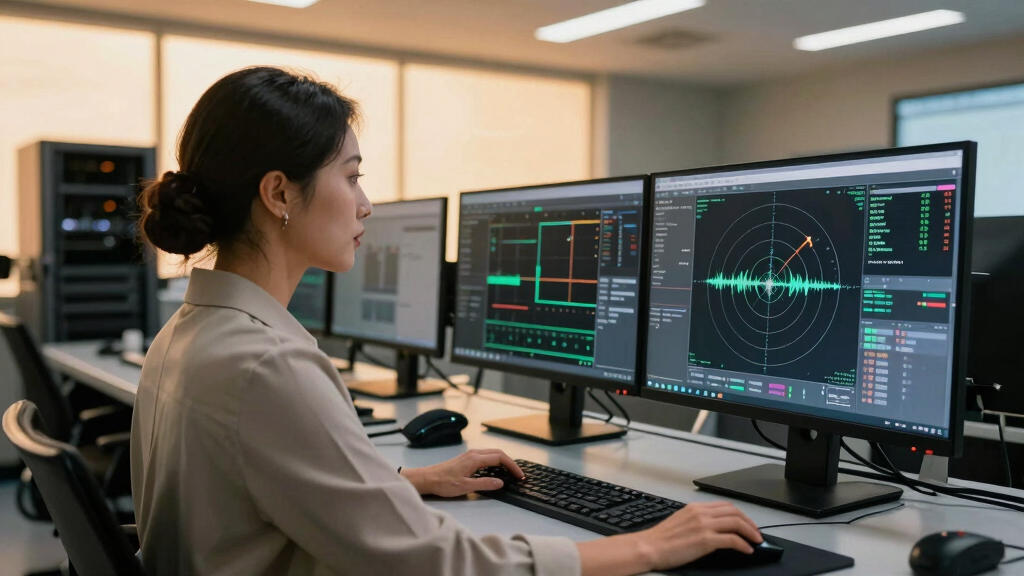
The growth of SAR changes where operational value is created. Satellites can collect repeatedly, but raw radar imagery is difficult to interpret: it is speckled, geometrically distorted and unlike a conventional photograph. Without reliable processing, more collection can produce longer queues instead of faster decisions.
For businesses, automated analysis could support flood mapping, infrastructure monitoring and port tracking. Emergency agencies may receive damage indicators while storms still obscure optical views. Governments can use radar to investigate vessels operating without transponders or to monitor activity during poor weather, although detections remain leads requiring validation, not automatic proof of intent or identity.
synthetic aperture radar (SAR) satellite image analysis software
As an affiliate, we earn on qualifying purchases.
As an affiliate, we earn on qualifying purchases.
Europe Expands Sovereign Radar Capacity
Spaceborne radar was once concentrated in a small number of national programs. The source briefing describes a broader commercial market in 2026, led by operators including Finland-based ICEYE, alongside publicly funded systems such as Europe’s Sentinel-1 program.
The briefing reports that Germany has a €1.76 billion Bundeswehr agreement involving ICEYE and cites planned or developing national capabilities in Poland, Portugal and Greece. These programs reflect demand for nationally controlled tasking, since access obtained through a foreign commercial subscription may be limited during a dispute or crisis.
The source also cites a forecast placing the global SAR market at $7.45 billion in 2026 and $18.8 billion by 2034. No forecasting company or methodology was identified in the supplied material, so those figures should be treated as an attributed projection rather than an established outcome.
“The sensor is solved — the reading of it isn’t.”
— Thorsten Meyer AI briefing
Performance and Market Claims Need Proof
It is not yet clear how consistently the cited 16-centimeter resolution can be delivered across different targets, imaging modes and scheduling constraints. The supplied material also does not provide procurement documents confirming every contract value, constellation timetable or national program scope.
AI performance presents another open issue. No accuracy rates, benchmark datasets or false-alarm figures were supplied for ship detection, damage classification or infrastructure warnings. Radar patterns can be misread, and automated findings may reproduce errors at scale unless trained analysts review uncertain results.
Contracts and Analytics Set the Pace
Attention will now turn to whether European programs place satellites in orbit on schedule and build domestic processing capacity alongside them. Buyers will also need evidence that automated systems can deliver timely, auditable and repeatable detections under real operating conditions.
Upcoming milestones include contract disclosures, constellation launches, independent performance testing and published measures of false positives and missed detections. Those results will show whether always-available radar becomes a dependable warning system or simply a larger stream of imagery awaiting review.
Key Questions
What is synthetic aperture radar?
Synthetic aperture radar is an active imaging system that sends microwave signals toward Earth and measures their reflections. Satellite motion combines repeated echoes to create detailed images from a comparatively small antenna.
Can SAR satellites really see through clouds?
Radar wavelengths can pass through most cloud cover, allowing collection during weather that blocks optical imagery. Results can still vary with radar frequency, surface conditions, imaging angle and processing choices.
What role does AI play in radar surveillance?
AI screens and classifies radar data, helping analysts locate possible ships, floods, damaged structures or ground movement. It supports interpretation but does not replace sensor collection, validation or human judgment.
Why are governments buying national constellations?
A national constellation can give a government greater control over tasking, access and processing. Commercial services may offer faster entry and lower initial costs, but reliance on a foreign provider can create availability and sovereignty risks.
Source: Thorsten Meyer AI
Fall Picks
fall essentials
As an affiliate, we earn on qualifying purchases.