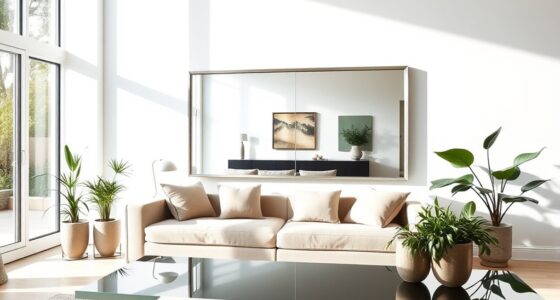
Designing for biophilia involves incorporating natural elements like plants and sunlight into your indoor space to enhance well-being, productivity, and aesthetic appeal. To do this effectively, select suitable plants that thrive indoors and place them where they can be appreciated and cared for. Incorporate ample natural light through windows or skylights to create a bright, inviting environment that supports your mood and health. Keep exploring to discover more ways to seamlessly bring nature inside your space.
Key Takeaways
- Incorporate natural elements like plants and sunlight to improve well-being, productivity, and create inviting indoor environments.
- Use strategic placement of plants to enhance indoor air quality, filter toxins, and increase oxygen levels naturally.
- Maximize natural light through window and skylight placement to boost mood, regulate circadian rhythms, and reduce energy use.
- Integrate greenery and light to soften interior spaces, complement earthy tones, and promote visual harmony and aesthetic appeal.
- Select suitable plants and design layouts that support health, creativity, and create natural sanctuaries within indoor spaces.
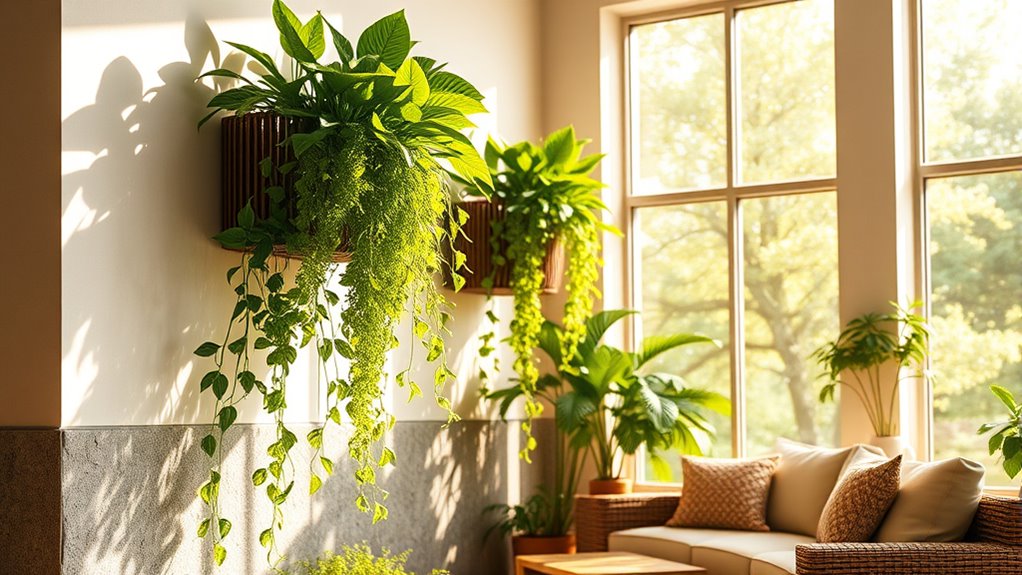
In today’s built environment, designing for biophilia isn’t just a trend—it’s a proven way to enhance well-being and productivity. When you incorporate natural elements like plants and ample natural light into your space, you create an environment that feels more alive and inviting. One key aspect of this approach involves focusing on indoor air quality. Plants are not only attractive additions; they actively improve indoor air by filtering toxins and increasing oxygen levels. This results in a fresher, healthier atmosphere that boosts your energy and concentration. By selecting the right plant species and positioning them strategically, you can optimize indoor air quality while elevating the aesthetic harmony of your space. The presence of greenery softens stark interiors, blending functionality with beauty seamlessly. As you integrate plants into your environment, think about their placement to maximize both their visual appeal and air-purifying benefits. For example, placing a tall, lush fern near a workspace not only adds visual interest but also enhances humidity and air quality around you.
Natural light plays an equally crucial role in designing for biophilia. It’s not just about illuminating a room—it’s about creating a connection with the outdoors that influences your mood and focus. When you flood your space with sunlight, you help regulate your circadian rhythms, which improves sleep and overall well-being. Strategically positioning windows or skylights ensures that natural light flows in throughout the day, reducing reliance on artificial lighting. This not only saves energy but also creates a harmonious visual environment that feels more balanced and calming. To enhance aesthetic harmony, consider how the light interacts with your interior design elements, such as the colors of your walls and furniture. Soft, natural light complements earthy tones and organic textures, reinforcing the natural theme.
Combining plants with natural light creates a cohesive, inviting space that nurtures both your physical health and visual serenity. The key is to design with intention—selecting plants suited for your indoor environment and positioning them where they can thrive and be appreciated. By doing so, you establish a space that supports your well-being, fosters creativity, and maintains aesthetic harmony. Ultimately, designing for biophilia transforms your environment into a sanctuary where nature’s benefits are woven into every detail, making it a place you truly want to be.

Costa Farms Live Air Purifying House Plants 6 Pack – Hand Selected Easy to Maintain Indoor Assorted Indoor Houseplants, Curated Mix, Low Light, Home Office Decor Plant Gift
BEAUTIFUL ROOM DÉCOR BUNDLE: This 6-pack offers incredible value to instantly decorate multiple spaces with live houseplant room…
As an affiliate, we earn on qualifying purchases.
As an affiliate, we earn on qualifying purchases.
Frequently Asked Questions
How Do Plants Impact Indoor Air Quality?
Plants improve your indoor air quality by acting as natural air filters, removing toxins and increasing oxygen levels. To maximize benefits, you should select plants known for their air filtration abilities, like snake plants or peace lilies. Regularly watering and maintaining your plants ensures they thrive and continue to purify the air effectively, creating a healthier, more invigorating indoor environment for you.
What Are the Best Natural Light Sources for Different Rooms?
You need sunlight flooding your rooms like a waterfall—so choose window placement carefully! For living areas, large windows or southern exposure bring in maximum light, while skylights brighten up kitchens or hallways with natural radiance. Bedrooms benefit from east-facing windows that catch morning light, and bathrooms gain from high windows or skylights for privacy and brightness. Maximize natural light by strategically selecting window placement and skylight options for every space!
How Can Biophilic Design Improve Mental Well-Being?
Biophilic design boosts your mental well-being by reducing stress and enhancing cognition. When you incorporate natural elements like plants and sunlight, you create a calming environment that helps you relax and focus. These natural features also improve air quality and boost mood, making it easier for you to stay productive and centered. Embracing biophilia transforms your space into a sanctuary that supports your mental health daily.
What Maintenance Do Indoor Plants Require?
Imagine you have a thriving pothos in your living room. To keep it healthy, you’ll need a consistent watering schedule, usually once a week, and monitor for pests like spider mites. Regularly prune dead leaves and check soil moisture. Keep leaves clean with a gentle wipe. By staying attentive to watering and pest management, your indoor plants stay vibrant, boosting your space’s natural feel and your well-being.
Are There Cost-Effective Ways to Integrate Biophilic Elements?
Yes, you can incorporate budget-friendly greenery and DIY biophilic design to make your space more natural without overspending. Opt for easy-to-maintain plants like pothos or snake plants, and create your own planters using recycled materials. Use natural light creatively by rearranging furniture or adding affordable window treatments. These simple, cost-effective steps bring biophilic benefits into your home or office, making it healthier and more inviting.

Stecutts 1×1 Ft Smart Blue Sky Light Ceiling Lamp, APP Control and Biological Rhythm Simulate Sunlight Irradiation, Artificial Skylight for Living Room, Bathroom, Office (1×1 Ft)
Blue Sky Experience: The artificial skylight ceiling lamp reproduces the ligh of the sun and the sky in…
As an affiliate, we earn on qualifying purchases.
As an affiliate, we earn on qualifying purchases.
Conclusion
As you step into your space, imagine sunlight streaming through windows, casting shimmering patterns on lush greenery. Feel the gentle breeze from nearby plants and hear the soft rustle of leaves, creating a calming oasis indoors. By incorporating natural elements, you craft a sanctuary where vibrant life and tranquility intertwine, transforming your environment into a lush, inviting haven. Embrace biophilia, and let nature’s beauty breathe new life into your daily surroundings.

BIOPHILIC CRAFTING: Creating Natural Planters, Moss Walls & Organic Decor from Foraged Materials
As an affiliate, we earn on qualifying purchases.
As an affiliate, we earn on qualifying purchases.
Costa Farms Live Air Purifying House Plants 6 Pack – Hand Selected Easy to Maintain Indoor Assorted Indoor Houseplants, Curated Mix, Low Light, Home Office Decor Plant Gift
BEAUTIFUL ROOM DÉCOR BUNDLE: This 6-pack offers incredible value to instantly decorate multiple spaces with live houseplant room…
As an affiliate, we earn on qualifying purchases.
As an affiliate, we earn on qualifying purchases.